 |
|||
 |
|||
 |
 |
 |
|
 |
|
 |
 |
 |
|||
 |
|||
 |
|||
 |
 |
Understanding Easy to Use Web HostingIn today's digital age, establishing an online presence is crucial, whether you're a budding entrepreneur, a passionate blogger, or a small business owner. One of the first steps in this journey is choosing the right web hosting service. However, the myriad of options available can be overwhelming. This is where the concept of 'easy to use' web hosting comes into play. But what does 'easy to use' really mean? Let's delve into this topic to help you make an informed decision. When we say 'easy to use', we're referring to web hosting platforms that offer a seamless experience, even for those who may not be particularly tech-savvy. The beauty of such platforms lies in their ability to combine powerful features with user-friendly interfaces, ensuring that users can set up their websites without needing to decode a myriad of technical jargon. There are several key elements that contribute to the ease of use of a web hosting service.
While these features are fundamental, it's also important to consider subtle nuances that might influence your decision. For instance, some might prefer hosting services that offer a clean and minimalist interface, whereas others might appreciate a platform with more vibrant and engaging visuals. Personal preference plays a significant role in what you might find 'easy' to use. Moreover, it's worth mentioning that the definition of 'easy to use' can vary depending on your specific needs. For instance, a web developer might find a more advanced control panel easier to navigate due to their experience, while a beginner might lean towards a simpler layout. Thus, when evaluating web hosting options, it's beneficial to assess your own level of comfort with technology and choose a service that aligns with it. In conclusion, easy-to-use web hosting isn't a one-size-fits-all solution, but rather a spectrum where different platforms cater to different user preferences and skill levels. By considering the aspects discussed, such as intuitive design, support, and scalability, you can find a service that not only meets your current needs but can also adapt as your online presence grows. Ultimately, the right choice will empower you to focus more on creating and sharing content, rather than getting bogged down by technicalities. Happy hosting! https://www.cnet.com/tech/services-and-software/best-web-hosting-for-beginners/
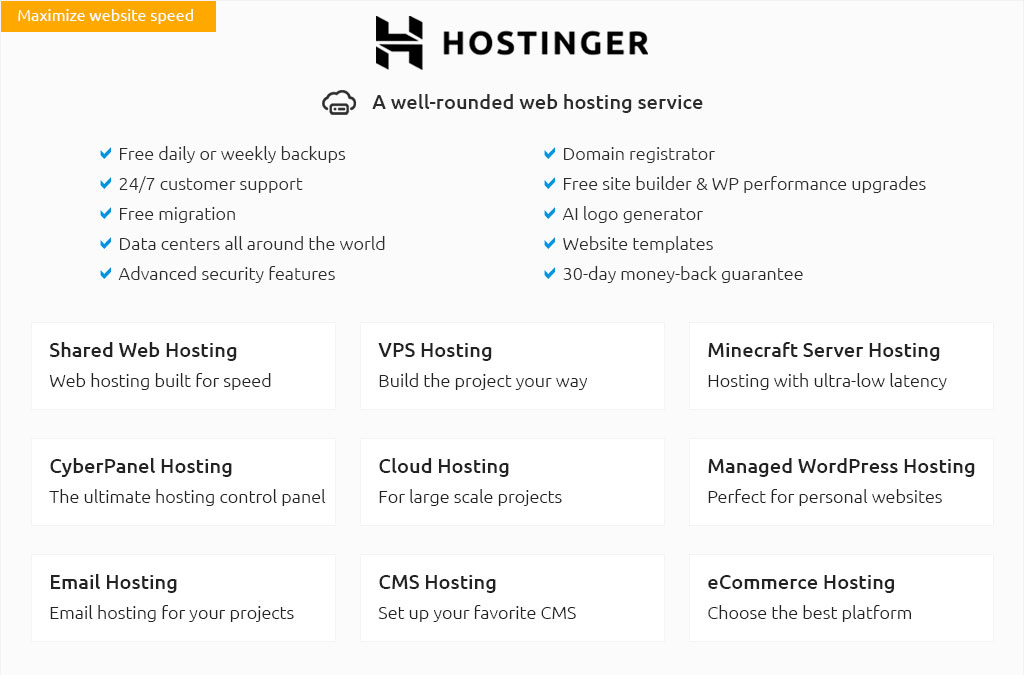
Hostinger is the best web host for beginners overall. Hostinger offers a simple purchase process, guided WordPress setup, and easy-to-use server management ... https://hostscore.net/choose/best-web-hosting-for-beginners/
Hostinger's user-friendly control panel (hPanel) and one-click installers make it easy for beginners to set up and manage their websites. The ... https://www.reddit.com/r/webhosting/comments/1dvwkxj/what_is_the_best_hosting_for_simple_web_hosting/
I've been using WebGee for multi sizes websites, and it's been perfect. They have simple, affordable plans that let you run PHP and SQL without ...
|
